











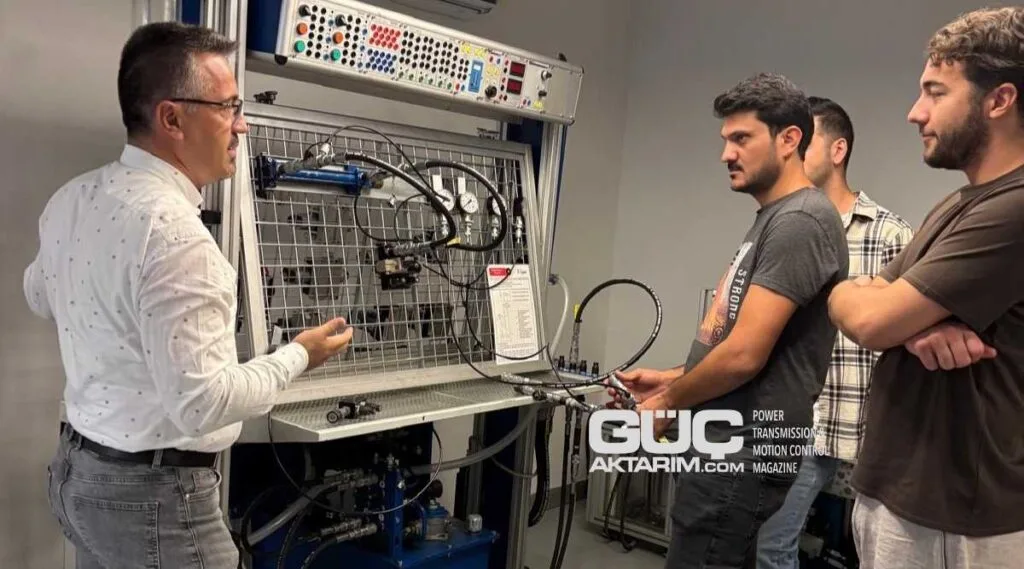
The importance of technical training lies in the fact that it is one of the fundamental elements in building a qualified workforce in industry. Strengthening the link between the school and the production floor directly determines the effectiveness of technical education.
Countries that carry weight on the world stage, with advanced industry and manufacturing and strong economies, attach particular importance to technical training in developing a qualified workforce. As my area of expertise covers technical subjects such as hydraulics and pneumatics, I can say this with confidence: one of the success factors of these countries in developing qualified technical people is the way they have integrated the role they assign to vocational and technical education with 21st-century technology. The success of vocational and technical education lies in individuals possessing the technical knowledge and skills to understand and use technology, communication and problem-solving skills, and the discipline to work collaboratively. This sentence sums up our perspective on the subject.
When vocational and technical education systems around the world are examined, it is clear that there are significant differences between developed countries in Europe, the Americas, Asia and Australia. While some countries focus on a full-time vocational and technical education model, others apply an apprenticeship model.
The most tangible developments in this area are taking place in Germany, which has embraced apprenticeship-based training. Indeed, the technical education system in Japan, regarded as a technology giant, was modelled on the German technical education system. The key point here is that individuals training in technical fields are closely involved with industry and production, and that learning by doing and hands-on training methods come to the fore for most of the learning process.
In our country, the mission of developing well-qualified people in technical subjects is undertaken by public and private institutions providing vocational training.
- Are these institutions adequate in terms of education?
- Is everything that needs to be learnt learnt at school?
- Are these schools equipped with sufficient hardware and up-to-date knowledge?
- Is learning by experimenting a useful method?
- Is everything learnt in the field correct?
Based on more than 20 years of knowledge and field experience in technical training, I can say that, as you might expect, the outlook on technical education in our country and the approaches to developing qualified technical people are not particularly encouraging.
It is known that the technical staff the market needs are trained through two different methods in the technical training provided in our country.
Technical schools: Vocational high schools, technical high schools, vocational colleges and engineering faculties are our technical schools. To train technical staff at the required level, the process in these schools begins with the teaching of technical knowledge, continues with reinforcing what has been learnt in school workshops and internships, and finally aims to produce staff ready to work in the businesses that need them, above all factories, where theory and practice are brought together.
Field practice: The second method, defined as learning on the job within a master–apprentice relationship, involves a learning process that begins at a certain age in the businesses where the work is carried out, increasing knowledge and skills through methods such as trial and error and learning by watching until the person reaches the level at which they can do the job. Colloquially, we might call it the question of being school-trained or self-taught.
With human resources technically developed through training, efficiency losses in companies, including those caused by production stoppages, can be prevented, and the Total Cost of Ownership of the related investment will also be far more favourable. In the bigger picture, this will also contribute to our national economy.
Today, business owners and the managers of technical departments, maintenance in particular, need technical human resources with expertise in their field. The accelerating pace of technological development, changes in the way the new generation learns and the modernisation of equipment used in hands-on training make it difficult for schools to keep pace with these developments in the education and training process. This can only be achieved with well-trained technical human resources who are open to innovation, continue to develop themselves and can keep up with technology.
In our country, as I have personally witnessed, expert and visionary companies are prepared to take responsibility. The permanent investments they make in their own facilities (hydraulic and pneumatic training sets, etc.) and the importance they attach to training help, as far as their means allow, to close the gap in qualified technical human resources.
That employees learn through practical exercises, apply what they have learnt in the field and thereby deliver a return in efficiency to the company and the unit in which they work is a goal desired by employers above all, as well as by department managers and the participants themselves. Technical training that does not include realistic applications, and training delivered by instructors without much field experience, can unfortunately remain very theoretical and also be tedious for participants. Instructors are among the leading actors in ensuring that training is efficient, enjoyable and lasting, far removed from dry theory and tedium. When companies develop their human resources using the investments they have made in their own facilities, it is very important to choose the right trainer, whether an in-house instructor or an invited external expert who also has practical knowledge of the subject.
- It is essential that the instructor is able to revisit the subject with new training models that keep pace with modern technology.
- Particularly in adult education, the instructor should move away from conventional lecturing patterns and set an example as someone with strong presentation skills who highlights visual elements and has kept, and continues to keep, abreast of the latest technological developments.
- The equipment used in training should be kept up to date.
- The instructor should be capable of managing an interactive training process that incorporates technology, uses plenty of examples and involves participants in the training.
- When choosing an instructor, the choice should fall not only on those who are experts in the field and know the job best, but on instructors who can best convey their knowledge, have well-developed communication and presentation skills, and make use of modern devices and today’s technological possibilities.
To sum up, training is a holistic whole. This whole is a process that continues from pre-training preparation through to post-training reporting. It would be fair to conclude by saying: “The most important factors in this process are the instructor delivering the training and the institution responsible for organising it.”
In this context, as the Fluid Power Association (AKDER), we have made a very important investment in the future with a new vision at our new premises, and with our practice area featuring fully equipped training sets, we aim to bring you the best training to meet the sector’s need for skilled staff. In line with these goals, although 2025 was a transition year for us, we closed the year productively with the open-enrolment courses we launched and the training services delivered on companies’ own premises both in Türkiye and abroad. We have also made investments to meet the growing potential demand for training in the years ahead. The main headings of these investments can be summarised as establishing a systematic structure, modernising training equipment, and updating and developing training content.
By way of a final word, I can say that the happiness of having closed the year well, combined with the excitement of the steps taken to reach the goals set for the coming years, has produced a picture to be proud of.
Wishing that you add value every day to yourselves, to the businesses you work for and to our country, and that our collaborations continue to grow in the period ahead…
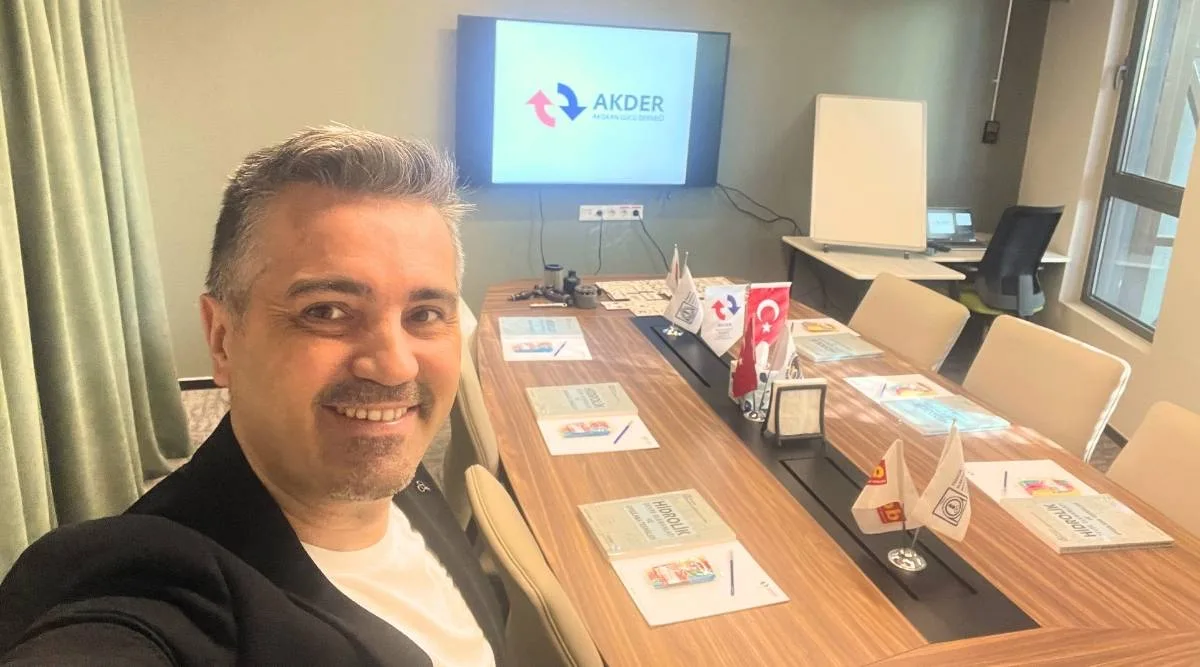
Who is Barış Özgenç?
AKDER Secretary General / Senior Expert Trainer
Born in Kocaeli in 1980, Barış Özgenç graduated from the Mechanical Teacher Training programme of Marmara University’s Faculty of Technical Education in 2003. He began his professional career as an Assistant Technical Specialist in the Maintenance and Repair Department of Bayrak Tekstil, and went on to work as an After-Sales Support Specialist for CNC machines at SES3000. From 2005 he worked without interruption for 13 years at BOSCH Rexroth, the automation company of Robert BOSCH GmbH, first as a Dealer Relations Specialist and later as Head of the Training Department. He played an active role in managing all processes in the training department and, as a senior expert trainer, in delivering training on hydraulics, pneumatics and automation. He delivered a great many courses at BOSCH Rexroth’s Gebze site, both open-enrolment and company-specific. Between 2016 and 2018 he established the Technical Training Department at SED Stratejik Eğitim ve Danışmanlık, delivering training and seminars. Özgenç, who obtained a second bachelor’s degree from the Department of Mechanical Engineering at Kocaeli University’s Faculty of Engineering in 2016, is married and the father of two sons. Working as Secretary General of the Fluid Power Association (AKDER) since 2024, Özgenç is also responsible for delivering and organising the training courses run by AKDER. To date he has delivered nearly 500 training courses, amounting to more than 8,000 hours of training in total.
In 2012, Barış Özgenç became the first certified trainer after successfully completing the courses and examinations of the UK’s NFPC (National Fluid Power Centre), the world’s first hands-on training centre accredited by the European Fluid Power Committee (CETOP), the central body of Europe’s fluid power associations.
His company-specific training courses have included many organisations such as AKA Otomotiv, AKG Termoteknik, AKSA Enerji, ALTINAY Havacılık, ANAGOLD Madencilik, ARÇELİK, ASSANPORT, Bakioğlu Holding, Bilecik Demir Çelik, BMC, BOSCH Rexroth (Bursa), Brisa, Çayeli Bakır İşletmeleri, ÇEMTAŞ, Çimsa Çimento, Demisaş Döküm, ETİMET ElektroMetalurji, Eren Enerji, Enerjisa Üretim, EVIOSYS, FNSS, GEDİK KAYNAK, Groupe Renault, Hasçelik, HAVAŞ, HİDROFİL, HİDROSER, HYDAC, ICM MAKİNA; KARDEMİR, Kastamonu Entegre, MECALAC, MILLPOWER, MMK Metalurji, Otokar Otomotiv, ÖZŞEN Madencilik, REPKON, SANDVIK, Standart Profil, TCEEGE, TGS, Tosyalı Demir Çelik, Trakya Döküm and TÜPRAG Metal Madencilik.
His open-enrolment technical training courses have been attended by participants from 174 different companies, including AkçanSA, Aselsan, Arçelik, Asilçelik, BOSCH, Brisa, BSH, Delphi, Diler Demirçelik, DPWorld, Ereğli Demirçelik, ETİ, EVYAP, Farplas, Federal Mogul, Hidromek, Indesit, İpek Kağıt, İskenderun Demirçelik, İzeltaş, İzmir Demirçelik, Kale Havacılık, Kalekalıp, KARDEMİR Demirçelik, Kroman Çelik, Kumport Liman, LİMAK Çimento, Mardin Çimento, Mercedes Benz, Modern Karton, Otokar, Özkoç Pres, Öztiryakiler, Porlanda Porselen, Repkon Makina, TAT Konserve, TIRSAN Treyler, the Central Bank of the Republic of Türkiye, Türkiye Petrolleri, TUSAS, Ülker, Yücel Makine and Zorlu Endüstriyel.

Author
Güç Aktarım


 Güç Aktarım (Power Transmission)Güç Aktarım · Ekim 2026Read the latest issue free →