















Contents
- Global Risks and the Resilience Provided by Domestic Manufacturing
- Engineering Competence in Heavy-Duty Conditions
- The Role of Domestic Power Transmission in Defence and Strategic Sectors
- The Sustainability and Added-Value Perspective
- Conclusion: Independence Starts with Small Components
- The Industry of the Future Will Rise on Domestic Strength
- A strong industry is built with strong, domestic components.
Disruptions in global supply chains, rising logistics costs and geopolitical risks have brought the importance of domestic manufacturing in industry back onto the agenda. Dependence on imports, particularly for components such as power transmission systems that directly affect production continuity, poses serious operational risks for businesses.
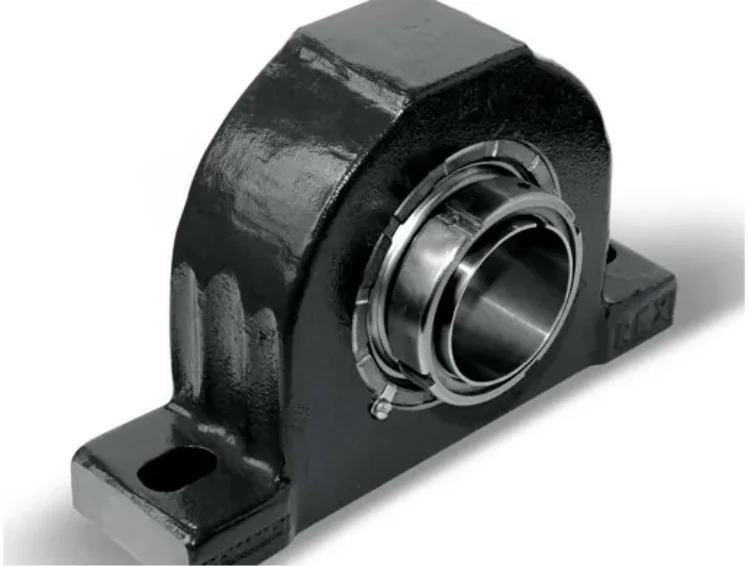
Although pulleys and power transmission components are often seen as a small part of the system, they are critical components that determine the continuity of the production line. A delay or quality problem in these components can bring an entire plant to a standstill.
Global Risks and the Resilience Provided by Domestic Manufacturing
In recent years, industrial organisations have faced the following problems in particular:
- Lead times of up to 8–12 weeks
- Sudden cost increases linked to exchange rates
- Delays in technical support and revision processes
- The need to stock spare parts
- This picture shows that domestic manufacturing of power transmission equipment is not merely an economic matter but a strategic security factor.
Domestic manufacturing makes possible:
- Short lead times
- Rapid engineering revisions
- Technical support close to the field
- Traceable quality control processes
and more.
Engineering Competence in Heavy-Duty Conditions
In recycling machinery and heavy industry applications, power transmission systems operate under demanding conditions such as:
- High torque,
- Abrasive and dusty environments,
- Continuous operating loads,
- Uneven load distribution.
These are the conditions they must withstand.
At this point, rather than supplying standard products, application-specific design and correct material selection (grey cast iron and ductile cast iron), balance optimisation and precision machining are of great importance.
At Ünsal Makina, we manufacture pulleys for recycling machinery with an engineering approach that takes heavy-duty conditions into account, offering an application-specific technical solution for every project. Our aim is not simply to supply a product, but to guarantee the efficient and safe operation of the system.

The Role of Domestic Power Transmission in Defence and Strategic Sectors
In defence and strategic manufacturing, the use of domestic components is no longer a choice but a necessity. Dependence on imports in critical systems can create delivery risk, cost volatility and operational security vulnerabilities.
Power transmission equipment produced with domestic engineering infrastructure offers:
- Full traceability
- Consistent quality control
- Rapid technical intervention
- The opportunity for long-term collaboration
and more.
This approach strengthens the strategic independence of our industry.
The Sustainability and Added-Value Perspective
Domestic manufacturing also offers significant advantages in terms of environmental sustainability. Thanks to short logistics distances and a long-life design approach, the carbon footprint is reduced.
A correctly designed pulley system:
- Minimises energy loss,
- Extends bearing life,
- Reduces maintenance frequency,
- Lowers the risk of unplanned downtime.
This delivers direct cost advantages and operational efficiency to businesses.
Conclusion: Independence Starts with Small Components
Independence in industry begins not only with large systems but with every single component that keeps those systems running. Choosing domestic manufacturing for power transmission systems is a strategic step in terms of supply security, engineering flexibility and sustainable production goals.
Strong partnerships established with domestic manufacturers secure not only today but also the industrial infrastructure of the future.
The Industry of the Future Will Rise on Domestic Strength
In the coming period, competition in industry will be determined not only by production capacity but by supply resilience, engineering capability and strategic independence. Power transmission systems are at the heart of this transformation.
Industrial organisations that choose domestic manufacturing go beyond short-term cost calculations and invest in long-term security, sustainability and operational continuity.
At Ünsal Makina, our belief is this:
A strong industry is built with strong, domestic components.
Every step taken towards domestic manufacturing today lays the foundation for a more independent, more competitive and more sustainable industry tomorrow.
Because in industry, real strength lies not only in the machine, but in the domestic engineering that keeps that machine running.

Author
Güç Aktarım


 Güç Aktarım (Power Transmission)Güç Aktarım · Kasım 2026Read the latest issue free →