














Contents
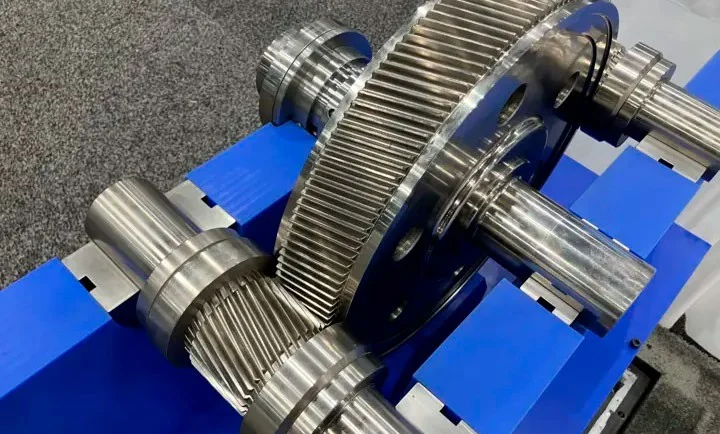
Sumitomo Drive Technologies’ High Speed Gearbox product family consists of high-speed gearboxes that can be configured to suit the application. The technical information published by the manufacturer focuses on speed and torque capacity, as well as housing design, tooth geometry and integration with monitoring systems.
Selecting a high-speed gearbox is not a process that can be completed simply by looking at the highest speed value in the catalogue. For the Sumitomo High Speed Gearbox, too, the key issue to assess is how the product’s stated capacity is matched to the operating conditions of a specific application. This review is based on the information on the manufacturer’s product page; it does not include independent performance testing or field measurements.
What features does the high-speed gearbox offer?
Sumitomo’s product page gives a torque range of 191–361,588 Nm and a maximum speed of 54,000 rpm. The manufacturer states application-specific design, three different housing options and compatibility with the installation of monitoring systems. However, it is not stated that these two capacity limits are achieved together at the same operating point. The values should therefore not be read as a guarantee of simultaneous performance for a single machine.
The first step in a purchasing evaluation should be to define the input and output speeds, the power to be transmitted and the required torque in the same technical offer. It should also be clarified which shaft the maximum speed refers to. In this way, the general capacity information in the catalogue can be turned into verifiable operating limits for the configuration to be selected.
Configuring the product to the application takes the evaluation beyond a standard model comparison. The buyer needs to compare not only the product name but also the technical scope of the unit offered. It should not be assumed that different solutions within the same product family share the same operating conditions.
Housing design and load capacity
The manufacturer states that it uses finite element analysis in the housing design and a bearing housing integrated into the casing. It associates this approach with the aims of high rigidity and low noise. In its description of load capacity, tooth geometry, tooth flank (lead) corrections and precise bearing calculations are highlighted.
This information explains the design approach; however, on its own it does not show the result under a specific operating condition. A technical review should ask which load cases the calculations cover and against which acceptance criteria the unit offered will be verified. The design method and the measurable performance of the machine to be delivered should be documented separately.
Similarly, measurement conditions are needed to assess the claim of low noise. Without knowing at what speed, under what load and from what distance the sound level was measured, comparison becomes difficult. The measurement method and acceptance limit to be requested at the quotation stage make this claim usable from a purchasing perspective.
Monitoring and auxiliary turning arrangement
The product page states compatibility with the installation of monitoring systems. In addition, the auxiliary turning arrangement is described as an automatically engaging and disengaging system comprising a right-angle bevel gear drive and an SSS clutch.
When assessing monitoring compatibility, it should be clarified which sensors and connections are included in the scope of supply. Sensor placement, data transmission, alarm thresholds and responsibility for connection to the plant’s existing control system should be defined in the technical specification. The compatibility statement should not be interpreted as meaning that all of this hardware and these services are supplied as standard.
For the auxiliary turning arrangement, the operating sequence, engagement conditions and relationship with the main drive should also be explained. The page reviewed does not give a detailed operating scenario for this arrangement. The application-specific evaluation should therefore be completed with the functional description and control documents to be provided by the manufacturer.
What information needs to be completed for technical selection?
The product page provides a framework for an initial assessment. However, selection data such as transmission ratio, efficiency, lubrication and cooling requirements, dimensions, weight and maintenance intervals are not detailed on the page.
These gaps do not indicate any shortcoming in the product; they show that publicly available promotional information is not sufficient to complete an engineering selection.
In a request for a technical offer, the continuous operating point, transient loads, operating time and ambient conditions should be described together. The manufacturer should be asked for the corresponding capacity, auxiliary equipment requirements and maintenance scope for these conditions. The content of the factory acceptance test should also be defined before ordering.
For a project in Türkiye, installation support, commissioning responsibility, spare parts supply and service organisation should also be confirmed in writing. The page reviewed does not provide delivery or service conditions specific to Türkiye. These topics require a procurement assessment separate from the product’s technical features.
Overall assessment
On the basis of the published information, the Sumitomo High Speed Gearbox should be treated as a product family requiring an application-specific engineering assessment. What is decisive in the selection decision is not so much the size of the catalogue limits as the documents and tests by which the unit offered meets the defined operating point.
As no launch date is given for the word “new” on the product page, it would not be appropriate to present the product as a current launch story. The conclusion of the technical review is clear: a final assessment can be made once application-specific performance data, acceptance conditions and service scope have been completed.
Source: Sumitomo Drive Technologies product page
Read in the e-magazine — Page 18

Author
Güç Aktarım


 Güç Aktarım (Power Transmission)Güç Aktarım · Ekim 2026Read the latest issue free →