










Contents
Hot material, the toughest load for a belt
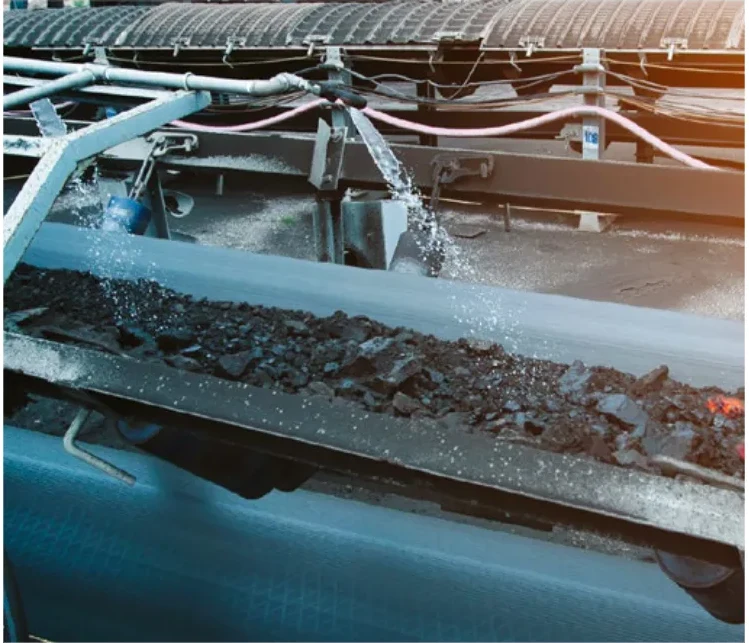
Clinker leaving the kiln in a cement plant, sand and casting waste in a foundry, slag and sinter in a steel plant… In these facilities, the conveyor belt contends not only with abrasion and impact, but also with constant high temperatures. When heat breaks down the structure of the rubber, the cover hardens and cracks, the bond between the cover and the carcass weakens and the belt begins to delaminate. The result is unplanned stoppages, early belt replacement and rising operating costs.
Gökışık, which has been operating in İzmir since 1985, developed its heat-resistant belt series to address this problem. The company states that these belts are suitable for carrying materials at temperatures of up to 180 °C.
EPDM-based cover
The series is based on an EPDM (ethylene propylene diene monomer) cover rubber. EPDM is a synthetic rubber known for its resistance to heat, oxidation and ozone, which is why it is frequently chosen for belts operating at high temperatures.
Gökışık emphasises that the cover rubber it uses provides strong adhesion and good thermal protection. Strong adhesion reduces the risk of the cover separating from the carcass under hot loads, while thermal protection shields the textile plies that form the belt’s load-bearing skeleton from the effects of heat.
Three carcass options
The belts can be produced with three different carcass fabrics according to the load and distance conditions of the application:
- EP (polyester-polyamide): Polyester yarn is used in the warp and polyamide (nylon 66) yarn in the weft. According to the company, this carcass is suitable for medium- and long-distance conveying at high loads and speeds, and stands out for its impact resistance, fastener holding, strong adhesion to rubber and low elongation. It is also resistant to alkalis and weak acids, mould, moisture and rot.
- NN (nylon-nylon): A carcass type with polyamide in both warp and weft, known for its flexibility and impact absorption.
- EE (polyester-polyester): A carcass type that prioritises dimensional stability.
Applications
Gökışık’s heat-resistant belts are recommended for lines where hot material is constantly on the move, such as clinker conveying at kiln outlets in cement plants, power plants, the chemical sector, waste and recycling facilities, foundries and steel plants.
Making the right choice
When selecting a heat-resistant belt, looking only at the maximum material temperature is not enough. The grain size of the material, how long hot pieces stay on the belt, line speed and ambient conditions should be assessed together, and the difference between the average load temperature and the momentary temperature of individual glowing pieces should also be taken into account. Gökışık states that it can produce the cover rubber specifically to customer requirements. This flexibility makes it possible to develop application-specific solutions for lines carrying hot material.

Author
Güç Aktarım


 Güç Aktarım (Power Transmission)Güç Aktarım · Kasım 2026Read the latest issue free →